BODY CLOCK
Crowing before the light
Under 12 hours of light and 12 of dim light, roosters began crowing 2 to 3 hours before the lights came on. In constant dim light they kept a rhythm of about 23.7 hours.
See the numbersWHAT THE RESEARCH SAYS
A cockerel does not wait for the sunrise.
Researchers at Nagoya University found that roosters crow ahead of dawn because of an internal body clock, and that in a flock the top-ranking bird gets the first word. Keeping a few hens yourself? There is a rule to know too.
CROWS FIRST the top bird
THE SHORT ANSWER
The dawn crow is set by a body clock.
In a flock, rank decides who goes first.
BODY CLOCK
Under 12 hours of light and 12 of dim light, roosters began crowing 2 to 3 hours before the lights came on. In constant dim light they kept a rhythm of about 23.7 hours.
See the numbersPECKING ORDER
A 2015 study found the top-ranking rooster always crowed first, then the others in descending order of rank. Remove him and the second-ranking bird took over.
Read the studyKEEPING HENS
In England and Wales you must register within one month of keeping poultry or other captive birds, including birds you keep as pets.
Check your birdsA QUICK KEEPER CHECK
Pick a situation to see what the GOV.UK guidance for England and Wales says. The bar shows how firmly the registration rule applies.
Based on GOV.UK guidance from Defra and the Animal and Plant Health Agency (APHA). Scotland has separate guidance. General information, not legal advice.
TWO NUMBERS WORTH KNOWING
From the 2013 Nagoya University study
published in Current Biology.
2–3 hours
How early roosters started crowing
With 12 hours of light and 12 hours of dim light, crowing was observed 2 to 3 hours before the lights came on, so the birds were anticipating the day rather than reacting to it.
BEFORE DAWN
23.7 hours
Crowing rhythm in constant dim light
Kept in dim light all the time, roosters still crowed in a cycle of about 23.7 hours, a sign of an internal circadian clock.
FREE-RUNNING
Source: Nagoya University research highlight, Cock-a-doodle-doo: No Need for an Alarm Clock (2013).
FOR BACKYARD KEEPERS
GOV.UK guidance sets out what keepers in England and Wales need to do, whatever the size of the flock.
Register within one month of keeping poultry. Without a CPH number you can register online, which GOV.UK says takes about 10 minutes.
After registering, confirm your details and the details of your birds to APHA every 12 months.
Tell APHA within 30 days if your contact details, species, purpose or numbers change, or if you stop keeping birds.
Noise from premises can be a statutory nuisance in England. Councils must investigate complaints and can serve an abatement notice.
THE PECKING ORDER
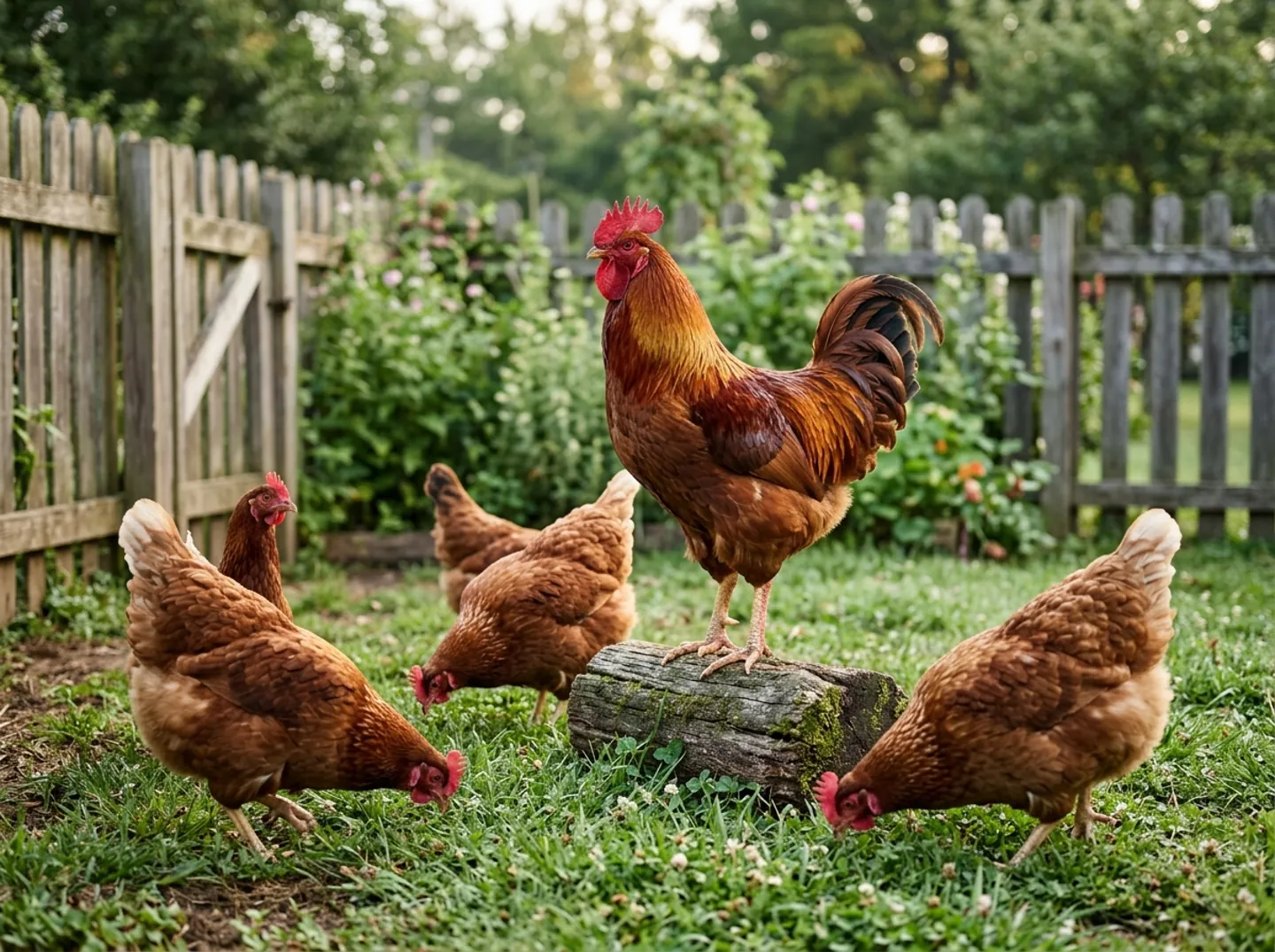
Chickens form a linear and fixed hierarchy in small groups. In a 2015 study in Scientific Reports, the top-ranking rooster set the timing of the predawn crow, and the presence of a dominant rooster reduced how often subordinates crowed before dawn.
The lower-ranking birds could still crow: crows set off by outside sounds or light did not depend on rank. The researchers concluded that subordinates wait for the top bird's first crow every morning, compromising their own body clock for social reasons.
Questions
Research from Nagoya University, published in Current Biology in 2013, showed that the dawn crow is driven by the rooster's circadian clock. Under a 12-hour light and dim-light cycle, roosters began crowing 2 to 3 hours before the lights came on.
Yes. The Nagoya University team found roosters crowed when given light or sound at various times of day, and concluded that crowing set off by outside stimuli is also regulated by the body clock.
A 2015 study in Scientific Reports found the top-ranking rooster always crowed first, followed by the others in descending order of social rank. When he was removed, the second-ranking rooster started the crowing.
In England and Wales, yes. GOV.UK says you must register within one month of keeping poultry or other captive birds at any premises, including birds you keep as pets. Scotland has its own guidance.
GOV.UK says registered keepers are contacted by the Animal and Plant Health Agency with updates and guidance if there is a disease outbreak, such as bird flu, in their area.
Sources
ABOUT THIS NAME
picadoodledo.com is part of the DoodleSale portfolio. It isn't in an auction right now, but you can ask about leasing it.